Content Moat Strategy for Affiliate Websites is the difference between short-term traffic spikes and long-term authority growth. In competitive niches, publishing random articles is no longer enough. Advanced affiliate marketers must build content systems that protect rankings, strengthen topical authority, and make their websites difficult to outrank.
Within the Affiliate Marketing Lighthouse Framework, a content moat is created through structured authority clusters, strategic internal linking, and depth-driven content architecture.
A strong content moat does not chase competitors — it makes competition irrelevant.
What Is a Content Moat Strategy for Affiliate Websites?
A Content Moat Strategy for Affiliate Websites is a deliberate content structure designed to create defensible rankings. Instead of targeting isolated keywords, this strategy builds topical dominance through comprehensive coverage of a niche.
A moat protects authority by:
- Covering topics deeply instead of superficially
- Connecting related articles through structured internal linking
- Publishing pillar content supported by cluster posts
- Updating core content regularly
When properly implemented, competitors cannot easily replicate the structural depth of your site.
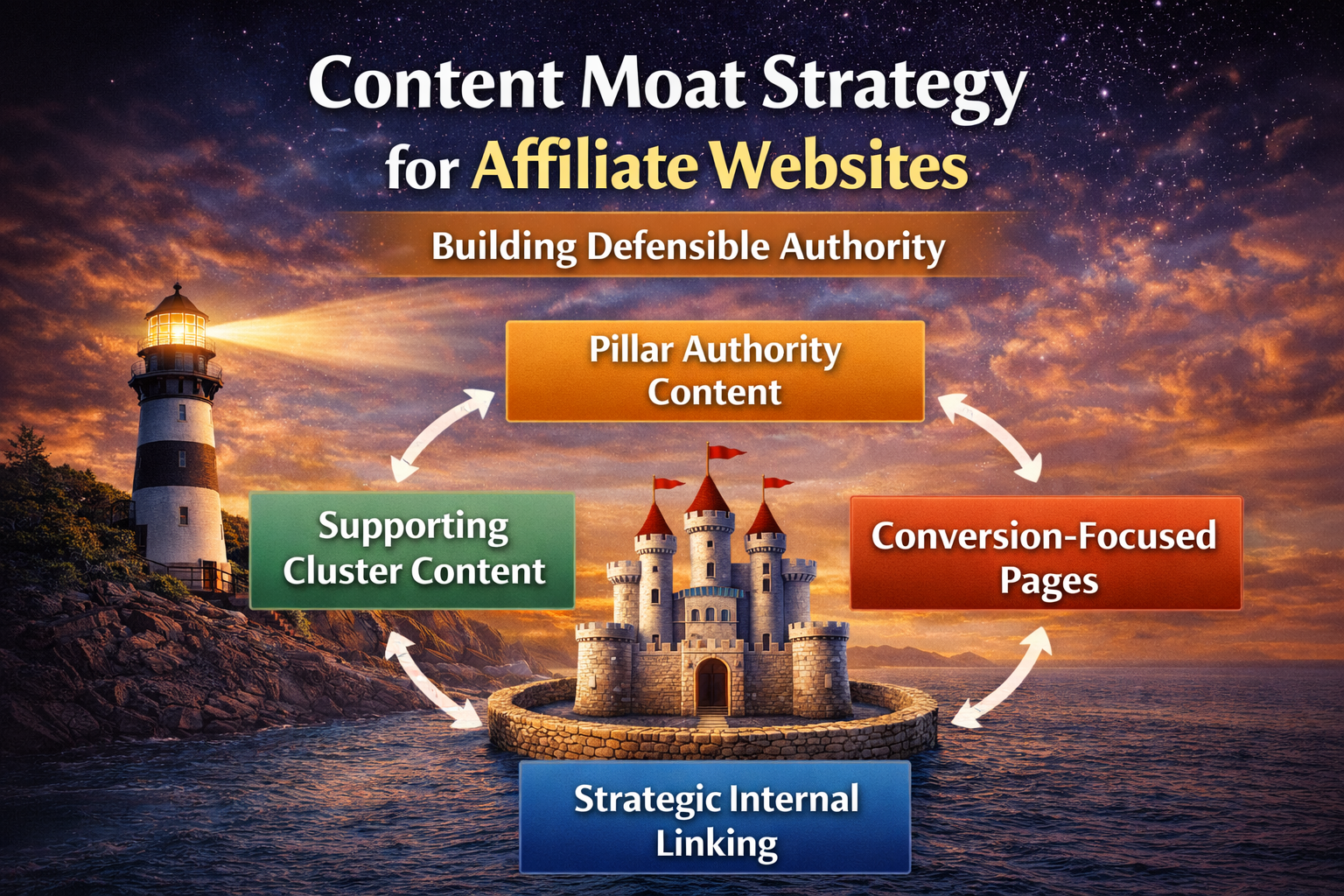
The Four Layers of a Content Moat
1. Pillar Authority Content
Pillar posts define your niche authority. These articles are comprehensive, strategic, and foundational. For example, your post on Trust-Driven Affiliate Marketing acts as an authority layer within your ecosystem.
2. Supporting Cluster Content
Cluster articles expand specific subtopics and link back to the pillar. This reinforces topical depth and strengthens ranking signals.
3. Conversion-Focused Pages
Buying guides and reviews sit at the monetization layer. These pages are supported by authority and cluster content rather than existing alone.
4. Strategic Internal Linking
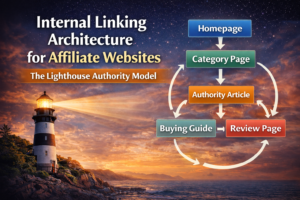
As discussed in Internal Linking Architecture for Affiliate Websites, authority compounds when content is interconnected intentionally.
Why Content Moats Protect Affiliate Revenue
Affiliate websites without a content moat are vulnerable to algorithm updates and competitive publishing. Thin review sites are easily replaced.
A Content Moat Strategy for Affiliate Websites increases:
- Ranking stability
- Brand authority
- Search visibility across related keywords
- Reader trust and repeat visits
Search engines prioritize helpful, experience-based content. These principles align with Google’s helpful content documentation, which emphasizes expertise, clarity, and value.
How to Build Your Content Moat Step by Step
- Identify your core authority topic
- Create one comprehensive pillar post
- Publish 5–10 supporting cluster articles
- Connect all pages using contextual internal links
- Update your pillar quarterly
Consistency builds the moat. Depth strengthens it. Structure protects it.
Long-Term Impact of a Content Moat Strategy
When a content moat is fully developed, your affiliate website shifts from content production to authority expansion. New articles strengthen existing clusters instead of competing with them.
Over time, this produces compounding SEO results, stronger monetization opportunities, and reduced dependency on constant publishing pressure.
FAQ
How long does it take to build a content moat?
Typically 3–6 months of consistent publishing and structured internal linking are required to establish noticeable authority depth.
Is a content moat necessary for small affiliate websites?
Yes. Even smaller niche sites benefit from structured topical dominance rather than scattered keyword targeting.
Return to the Homepage to continue strengthening your Affiliate Marketing Lighthouse authority system.